
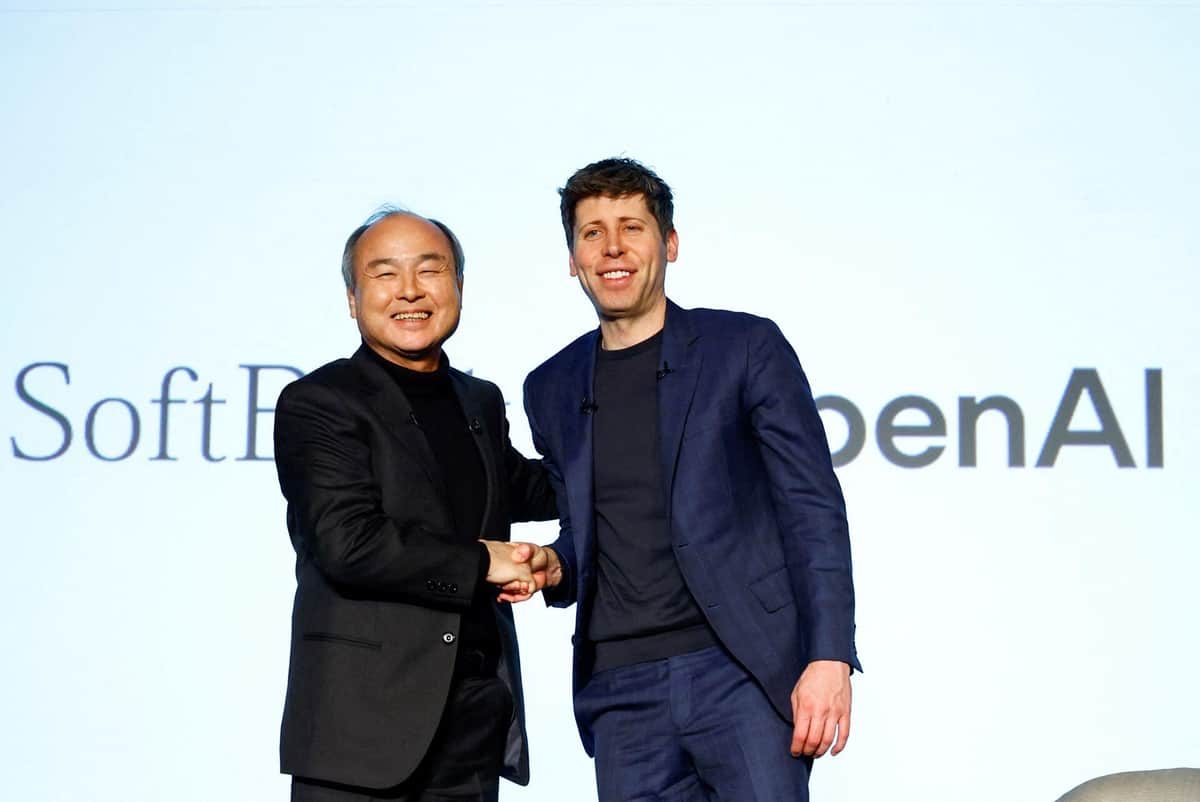
SoftBank Group reported a ¥768 billion net loss for the six months to September, as a ¥597.2 billion write-down on power equipment ordered for AI data centers in the US collided with growing local opposition to new construction, J-CAST News reported.
The group announced the consolidated results on November 10. A year earlier it posted a profit of close to ¥3 trillion.
AI data centers need enormous amounts of electricity. SoftBank Group placed advance orders for generating equipment to get ahead of a scramble for capacity. Changes to construction plans then left some of the equipment unneeded.
Non-refundable deposits and the costs of amending contracts produced the loss.
Stargate and OpenAI
The group's AI strategy is embodied by Stargate, announced in January 2025 with OpenAI and others. The plan calls for $500 billion, or roughly ¥75 trillion, in US AI infrastructure over four years, with Chairman Masayoshi Son at its head.
SoftBank Group has also kept pouring money into OpenAI, the company behind ChatGPT. It completed a $30 billion additional investment in October, bringing its cumulative outlay to $64.6 billion, or about ¥10 trillion, and its stake to roughly 13%.
Midterm backlash
The political weather in the US has shifted. Democrats retook both chambers of Congress in the November 3 midterm elections.
In gubernatorial races in Texas, Ohio and Georgia, where data center plans are concentrated, Democratic candidates who campaigned to pause or oppose the projects won.
Ballotpedia, a US election information site, counted 41 referendums on data center construction held alongside the midterms on November 3. Opponents won 40 of them.
Behind the resistance are worries about higher electricity bills from rising power demand, the large volumes of water needed for cooling, and noise. Opposition has spread to Europe, where about 2,000 people joined a protest in Dublin on November 7.
When Stargate was announced, Son stood beside US President Donald Trump at the White House and touted the huge investment in America. At the results briefing, Chief Financial Officer Yoshimitsu Goto said the US election outcome could slow projects across the data center industry, Bloomberg reported on November 10.
Even the AI developers are straining
The cost of the buildout is weighing on the AI developers themselves. OpenAI expects $840 billion in cumulative revenue over the five years from 2026 to 2030, the Financial Times reported in September.
Securing computing capacity and building infrastructure alone is expected to cost about $856 billion, or roughly ¥128 trillion. Spending on developing and running AI would exceed revenue.
Rival Anthropic is also under pressure. Revenue for July to September jumped about twelvefold from a year earlier to roughly $17 billion on wider use of its Claude AI service, Bloomberg reported on November 3. It still posted an operating loss of $567 million.
The stock market's AI boom is looking shakier. Nvidia, the leading maker of AI chips, announced on November 12 that Chief Executive Jensen Huang would step down. AI-related shares slid further, and the market's AI fever began to dim.
SoftBank Group has been here before. The poor performance of its Vision Fund, which invests in AI-using startups, pushed it to a net loss of about ¥1.7 trillion in the year to March 2022 and about ¥970 billion the following year.
Son kept investing in AI, expanding beyond developers into semiconductors and data centers. Winning the race for share could bring vast profits, but AI is a heavy eater. It demands huge sums of money and power, and the competition among investors has become a punishing war of attrition.
With the headwinds against data center construction strengthening in the US, the market he has counted on, and the risk of the AI bubble bursting, the question is whether Son can earn returns to match his outlay. The size of the loss has laid bare the fragility of a strategy that stakes the company's fate on AI.