
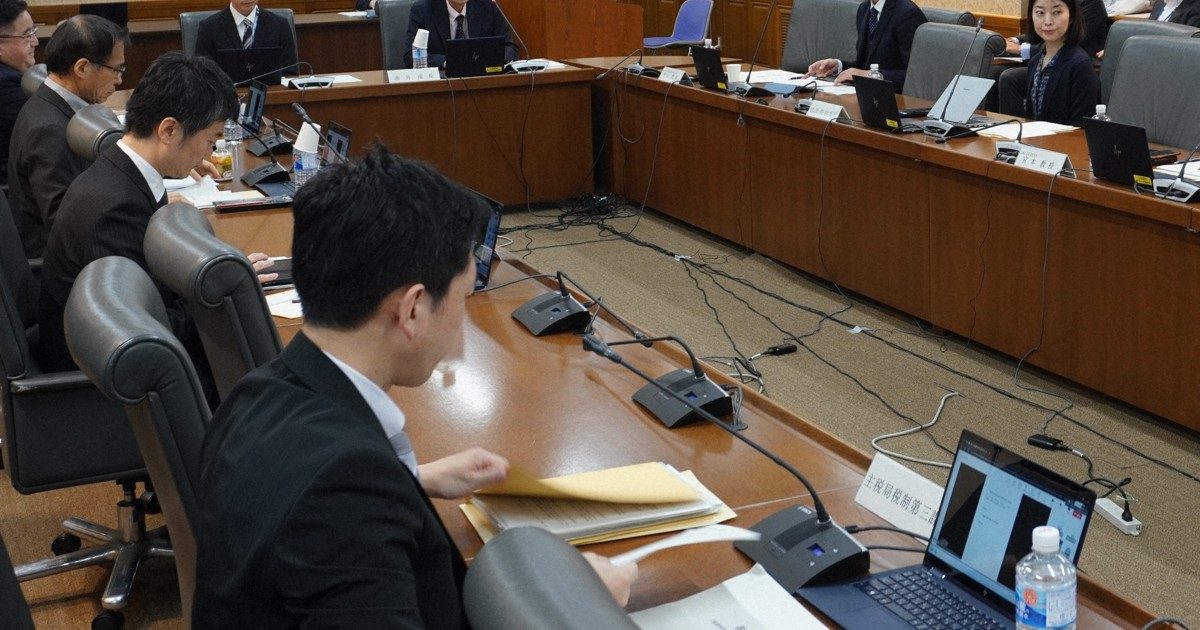
The Finance Ministry and the Small and Medium Enterprise Agency are in open conflict over whether to scale back corporate tax breaks for small businesses, a fight that will shape how the government pays for a planned cut in the consumption tax on food and drink.
The two sides set out their positions at a meeting of the government's tax commission — an advisory panel to the prime minister — on the 10th. The Finance Ministry raised the question of how the breaks should work.
The measures are part of the special tax measures (sozei tokubetsu sochi), which lighten corporate tax bills for a set period to encourage wage growth and capital investment. Four breaks aimed at small and medium-sized firms expire at the end of fiscal 2026, at a combined cost of about ¥870 billion in lost revenue.
Wage-hike incentive is the biggest target
The largest single item is the wage-increase promotion tax system, which accounts for ¥5.43 billion of the total. Companies that raise pay by 1.5% or more qualify for the reduction, and those that reach 2.5% get a larger one.
The Finance Ministry argues that if the system were driving wage growth, pay rises at small firms would cluster around the 1.5% and 2.5% thresholds that decide who qualifies. It points to the distribution of actual wage increases as evidence.
“Measures that do not lead to behavioral change and instead produce side effects need to be reviewed.”the Finance Ministry, at the government tax commission meeting
The SME Agency rejects that reading and argues the opposite: that the breaks do work. The two ministries are pressing their cases as the year-end tax revision debate approaches.
The review is being positioned as a way to fund tax cuts including the consumption tax reduction on food and drink. Which ministry wins the argument will help decide how much money is available.