
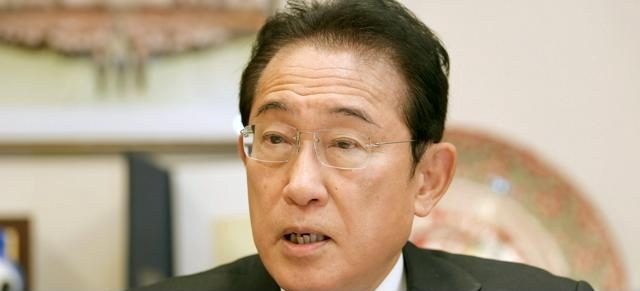
Former Prime Minister Fumio Kishida said adding individual government bonds to the lineup of the NISA tax-free investment account — the expanded small-lot investment exemption — "needs careful consideration," in an exclusive interview with the Asahi Shimbun on the 6th. The caution from the man who drove the expansion of NISA is likely to shape the debate over tax reform for fiscal 2027.
As prime minister, Kishida promoted a "asset management nation" vision in which households move their deposits and savings into investments, building personal wealth and strengthening companies' growth. As part of that, NISA was made permanent in 2024 and its tax-free allowance sharply enlarged. After leaving office he kept pushing the idea as chairman of a Liberal Democratic Party lawmakers' league, backing a "kodomo NISA" for children under 18, which starts in January next year.
On individual government bonds, the Financial Services Agency and the Finance Ministry have requested a "tax system for government bonds" in next fiscal year's tax reform. They cite "building a stable base of government bond holders" and "responding to individual investors' asset-building needs." A government bond NISA and similar ideas are understood to be in mind.
Kishida described NISA's purpose as "advancing the shift from savings to investment by giving tax breaks to investment in assets that carry risk." Adding government bonds — whose principal is guaranteed and which are treated as a safe asset — to NISA's scope would require care in light of "consistency with the purpose of the system," he said, signaling a cautious stance.
A warning on bond markets
His remarks point to a concern beyond the design of a savings account. Government bonds sit at the center of the market the government relies on to borrow, and steering household money into them through a tax break could change who holds that debt and how the market prices it.
The interview also covered criticism that NISA favors the wealthy and the phenomenon known as "NISA poor," in which investors overstretch themselves. Those parts of the interview sit behind the Asahi Shimbun's paywall.