
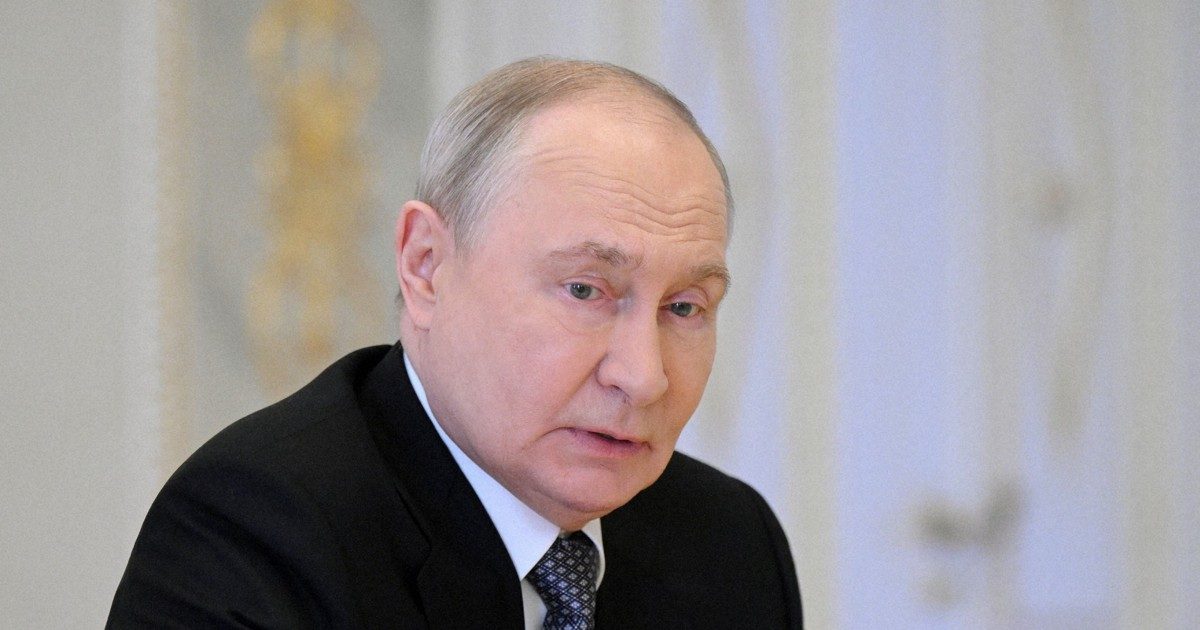
President Vladimir Putin has signed a decree placing the Russian factories of Japan Tobacco (JT) under the temporary management of Russian companies, unsettling Japanese firms that still hold assets in the country. Japan had 321 business locations in Russia as of October 2025, according to the Foreign Ministry.
An executive at one of those companies said the uncertainty is constant. "We never know when we'll be used as a diplomatic card. We're living in fear," the executive said.
The decree covers four production sites owned by JT International (JTI), the subsidiary that runs JT's overseas business, including plants in St. Petersburg in the northwest.
A market JT cannot afford to lose
JT sells eight brands in Russia, among them Camel and Winston. Its share of the market is about 35%, the largest of any maker.
Russia is one of the pillars of JT's overall business. The Russian operation accounted for about 25% of the company's operating profit in fiscal 2025.
A JT executive said the profit would not vanish at once. "We shouldn't lose 25% of our profit immediately, but we can't see where this is going," the executive said.
Under a 2023 decree, Russia has the authority to place assets of "unfriendly" states — those that have kept up economic sanctions over the invasion of Ukraine — under temporary management, Reuters reported. In September, the Swiss food giant Nestle was among the companies affected.
Japan plans to protest the move to Russia, a step reported separately that frames the seizure as a response to sanctions.